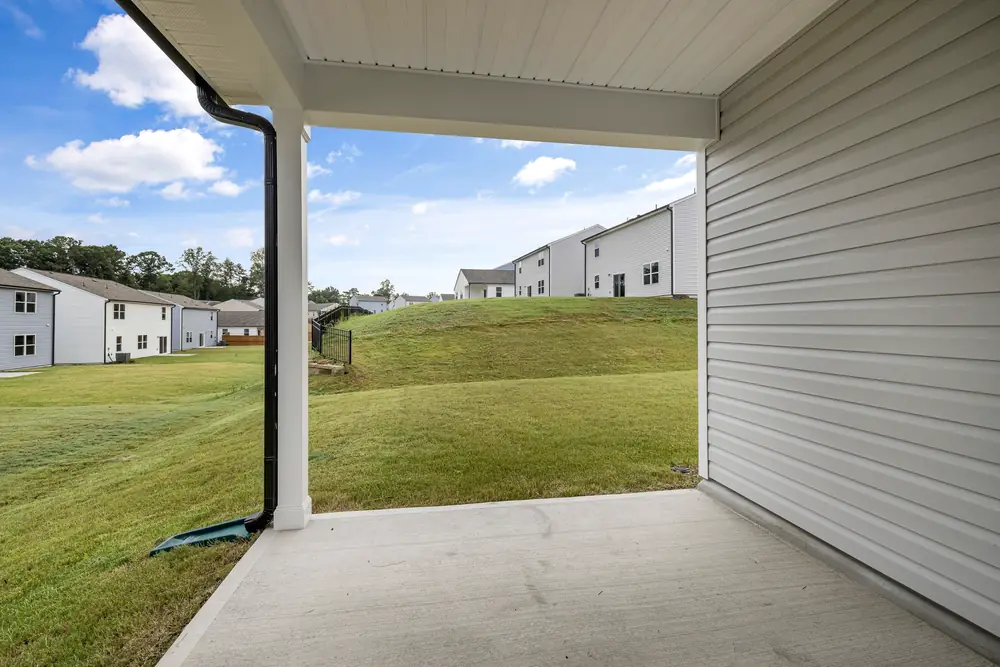
A patio is the easiest concrete job to get almost right and the easiest to live with when it's done properly. The difference shows up a few years in: a slab that drains, stays flat and cracks only in its joints, or one that holds a puddle against the back wall and heaves at a corner every February.
We pour new patios, extend old ones, and build the pads and walks that go with them. The estimate is free, done in your backyard, and written down with the size, thickness, base, joint layout and finish listed, so you know exactly what you're comparing.
Patios, pads and the walks between them
- Back patios off a slider or kitchen door, from a small sitting area to a full outdoor dining space.
- Covered patios under a new or existing roof, poured to work around posts and footings.
- Grill pads and fire pit pads set a safe distance from the house.
- Extensions to an existing patio that has run out of room.
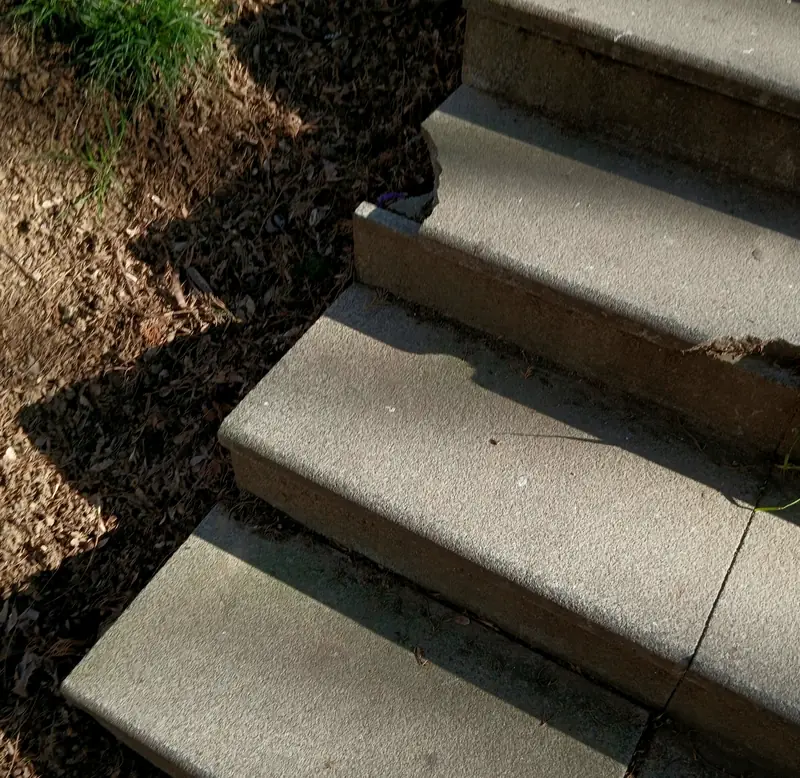
- Connecting walks from the patio to the driveway, the garage or a side gate. See sidewalks and steps.
- Old patio replacement, including breaking out and hauling off the slab that's there now.
Planning the size and shape
Lay it out before you price it. A garden hose or a few stakes and string show you how the patio sits against the house, where the door swings, and how much room is left in the yard. Stand at the back door and at the far corner of the lot, and check where the sun lands in late afternoon.
Shape matters for more than looks. Concrete shrinks as it cures, and joints tell it where to crack. The rule of thumb is to keep each panel square or close to it, no more than 1.5 times as long as it is wide, and to avoid L-shaped panels. A patio with an inside corner or a curve can still look great. It just needs its joints planned so every panel is a sensible shape.
A few more things worth deciding up front:
- The step down from the door. If the patio sits more than a step below the threshold, the steps have to meet Indiana's stair rules. See steps for the numbers.
- Downspouts. Any that empty onto the patio area should be extended or rerouted before we pour.
- Trees. Roots under a slab lift it over time. Large roots in the footprint are worth a conversation.
- Gas or power to a grill or heater. Run the line before the concrete goes in, and call Indiana 811 at least two full working days before any digging.
How a patio should be built here
Tippecanoe County is rated severe for weathering in Indiana's residential code, and most of the county sits on silty soils that drain slowly. A patio here is built for water and frost first.
| Item | What to expect | Why it matters |
|---|---|---|
| Thickness | 4 in. for a standard patio, thicker under a hot tub or heavy feature. | Plenty for foot traffic and furniture. Point loads need more. |
| Base | Compacted crushed stone over compacted native soil, black topsoil removed. | Water drains out of stone. It sits in silt and clay, then freezes. |
| Slope | Pitched away from the house across the whole slab. | Rain and snowmelt leave the slab instead of running to the foundation. |
| Joints | About every 10 ft on a 4-in. slab, never more than 15 ft, cut at least a quarter of the slab's depth. | Cracks land in the joints instead of across the middle of a panel. |
| Isolation joints | Where the slab meets the house, posts, steps and existing concrete. | Lets each piece move on its own without cracking the other. |
| Mix | Air-entrained, about 4,000 psi. | Holds up to repeated freezing and thawing. |
Finishes: broom, smooth or stamped
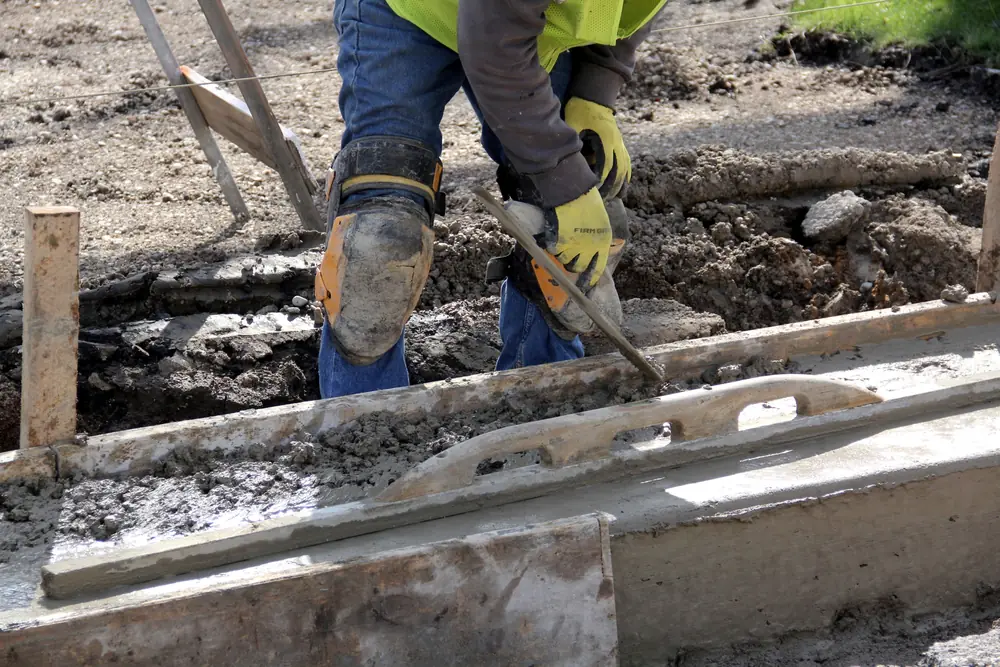
A broom finish is the standard for outdoor concrete. The fine texture gives grip when the patio is wet, frosty or covered in leaves, and it hides wear. A smoother float finish can work under a roof, where it stays dry, but a glassy steel-trowel finish gets slick outdoors and isn't a good choice in the open.
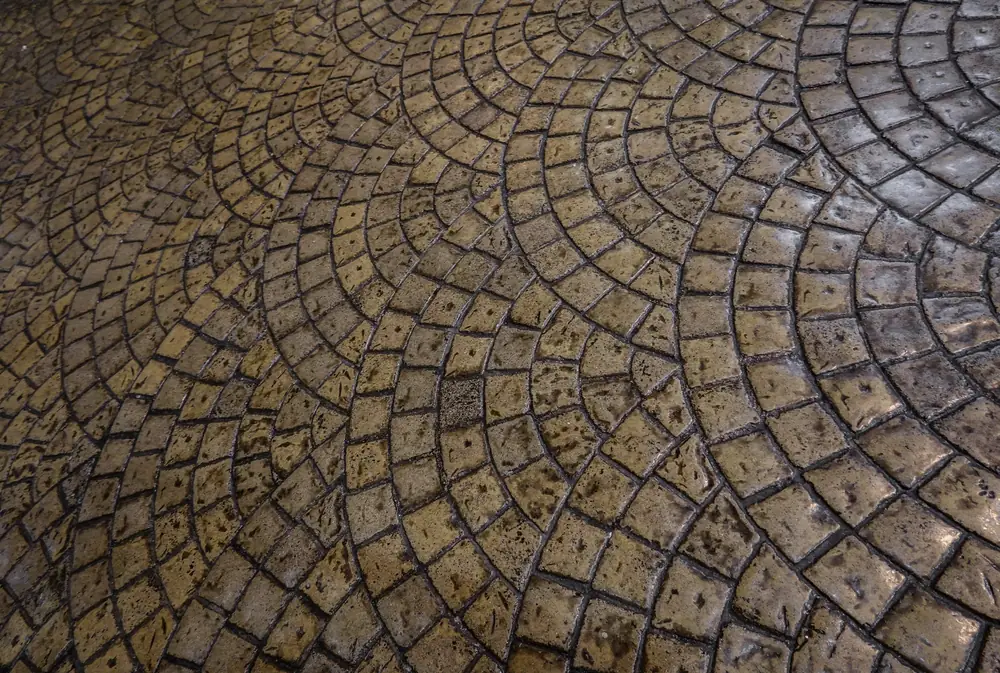
If you want the look of stone, slate or brick, stamped and colored concrete is poured the same way and then patterned and sealed. A common middle ground is a plain broom-finished patio with a stamped border, which costs less than stamping the whole slab.
Permits, historic districts and digging
The City of West Lafayette requires a building permit for new construction, structural changes and electrical work. Its permit page doesn't list patios or other flatwork, and it asks homeowners to call the Building Department at (765) 775-5130 when in doubt. A roof over the patio is a different story, so check before you design one.
If you live in the New Chauncey Historic District, the city's only local historic district, questions about exterior changes go to the Department of Development at (765) 775-5160. Outside Lafayette and West Lafayette city limits, the Tippecanoe County Building Commission at (765) 423-9225 handles permits.
Whatever the address, Indiana law requires a call to Indiana 811 at least two full working days before digging. Patios are shallow, but the base excavation and any post holes still count.
What a patio costs
Published cost data for Lafayette, IN puts a concrete patio at about $6 to $10 a square foot unreinforced and $7 to $11 reinforced. That range on some common sizes.
| Patio | Area | New concrete | Remove an old slab |
|---|---|---|---|
| Small, 12 x 12 ft | 144 sq ft | $864 to $1,584 | $170 to $270 |
| Mid-size, 12 x 16 ft | 192 sq ft | $1,152 to $2,112 | $230 to $360 |
| Dining and lounging, 16 x 20 ft | 320 sq ft | $1,920 to $3,520 | $380 to $610 |
| Large, 20 x 20 ft | 400 sq ft | $2,400 to $4,400 | $480 to $760 |
Published Lafayette-area ranges multiplied by the area, with removal at $1.20 to $1.90 a square foot. Your written estimate is the real number. Access to the backyard often matters most on a patio: if the truck can't reach, the concrete has to be wheeled or pumped in. The cost guide covers what moves the price.
Looking after a new patio
- Curing. Keep it damp or covered for the first 3 to 7 days. Concrete that dries out too fast loses strength it never gets back.
- Using it. Common practice is foot traffic after about a day. Hold off on heavy furniture and grills until we tell you the cure is far enough along.
- No salt the first winter. Shovel it and use sand for grip. After that, use deicers sparingly.
- Grease and stains. A mat under the grill and a sealer on the slab keep drips from soaking in.
We work across West Lafayette, Lafayette, Otterbein and the rest of Tippecanoe County, Indiana. See the service area, or call (765) 508-4206 to set up a time to look at your yard.
 Stamped and colored
 Sidewalks and steps
 Driveways