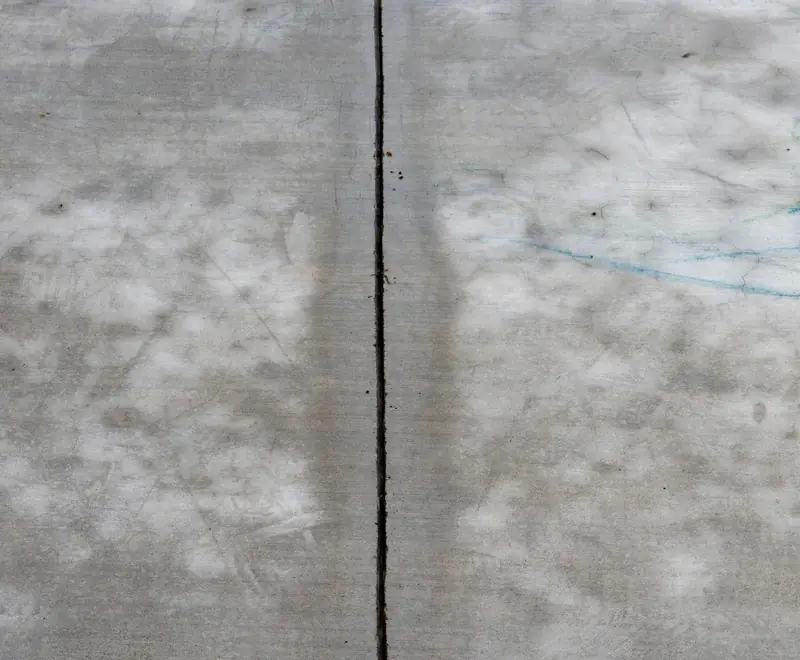
Most concrete that needs replacing in West Lafayette, Indiana didn't wear out. Something went wrong underneath or around it: water that couldn't drain, a base that was too thin, a downspout dumping against one corner, or salt on a slab that was too young for it. Pouring new concrete over the same mistake just restarts the clock, so a good replacement starts with figuring out why the old slab failed.
We tear out and replace driveways, sidewalks, patios, steps and garage floors, either the whole slab or only the sections that have failed. The estimate is free, done at your property, and written down, with the tear-out, haul-off, base repair and new concrete each listed.
Signs it's time to replace
- Sunken panels that hold water, trip people or have pulled away from the garage or steps.
- Heaved sections that rose in winter and didn't settle back, often near trees or along the edge of a lawn.
- Scaling, where the top layer flakes and peels away, usually worst where salt and meltwater collect.
- Cracks that keep moving, widening or stepping up so one side sits higher than the other.
- Broken corners and edges where tires run off the slab or the base has washed out.
- Water running toward the house, because the slab has settled and now slopes the wrong way.
Repair, lift or replace
Not every bad slab needs to go. When we walk the job with you, this is how we sort it out.
| What you see | Usual answer |
|---|---|
| A few panels sunk or cracked, the rest solid | Cut out and replace only those sections, at the joints. |
| A panel that dropped but is still in one piece | Sometimes it can be lifted back up for less than replacing it. We'll tell you if that's the better option. |
| Hairline cracks inside the joints | Leave them. That's the joint doing its job. |
| Flaking across most of the surface | Replace. Scaled concrete keeps scaling. |
| Broken into many pieces, heaved in several places | Replace the whole slab and rebuild the base. The ground underneath has failed. |
Why concrete fails around here
Winters here are hard on flatwork. The low at the Purdue airport reaches freezing on about 116 days a year, and the top inch of bare ground goes through dozens of freeze-thaw cycles a season. Every one of those cycles works on any water trapped under or inside a slab.
- Slow-draining soil. The most common soils in Tippecanoe County, like Drummer, are silty and poorly drained, and the water table can rise to within a foot or so of the surface in late winter and spring. A slab on a thin base over that ground sits in water right when it freezes.
- A thin or missing base. Without compacted stone under it, a slab has nothing firm to sit on and nowhere for water to go.
- Downspouts and grading. Roof water dumped against one edge softens the ground under it until the corner drops.
- Deicers on young concrete. Deicing chemicals belong nowhere near a slab's first winter, and in moderation after. Salt on new concrete is a leading cause of scaling.
- Joints in the wrong places. Joints should be cut at least a quarter of the slab's depth, about every 10 feet on a 4-inch slab, with panels close to square. Shallow or missing joints mean cracks wander across the middle instead.
- Tree roots. Roots lift slabs from below, most often along sidewalks and the edges of driveways.
How a replacement job goes
- Utilities get marked. Indiana law requires a call to Indiana 811 at least two full working days before digging.
- Permits, if the work reaches the street. In West Lafayette, replacing a driveway apron or the public sidewalk is right-of-way work, permitted by City Engineering, which allows up to 10 working days to review.
- Saw-cut and break out. We cut a clean line at a joint so the concrete staying in place isn't damaged, then break out the old slab.
- Haul-off. The broken concrete is loaded and hauled away. It's part of the estimate, not a separate bill.
- Fix the base. Soft or wet soil comes out, the subgrade is compacted, and new crushed stone goes in and gets compacted.
- Form, pour and finish. New concrete is tied to the old with dowels or separated with an isolation joint, finished, and jointed.
- Cure. It stays damp or covered for the first several days. Foot traffic usually after about a day, cars after about a week.
What replacement costs
Replacement is two prices added together: taking out the old concrete and pouring the new. Published cost data for Lafayette, IN puts removal at about $1.20 to $1.90 a square foot and new driveway or slab concrete at about $6 to $11. National figures for removal including disposal run higher, about $3 to $8 a square foot, and national figures for removing and replacing a sidewalk run about $10 to $25 or more.
| Job | Area | Tear-out | New concrete | Total |
|---|---|---|---|---|
| Two driveway panels, 10 x 10 ft each | 200 sq ft | $240 to $380 | $1,200 to $2,200 | $1,440 to $2,580 |
| Two-car driveway, 20 x 24 ft | 480 sq ft | $576 to $912 | $2,880 to $5,280 | $3,456 to $6,192 |
| Two-car garage floor, 24 x 24 ft | 576 sq ft | $691 to $1,094 | $3,456 to $6,336 | $4,147 to $7,430 |
Published Lafayette-area ranges multiplied by the area. Your written estimate is the real number. Small jobs often cost more per foot because the trip, the truck and the setup are the same size either way. Base repair, access and the apron permit move the number too. See the cost guide.
What to ask before you hire anyone
- Why did it fail? If the answer doesn't mention the base, drainage or joints, ask again.
- What happens to the base? The estimate should say whether soft soil comes out and how much new stone goes in.
- Where will the cuts be? Cutting at joints gives a cleaner result than patching mid-panel.
- Is haul-off included? It is in ours. In some quotes it's an extra line, or missing.
- Who pulls the permit? For work in the West Lafayette right-of-way, the city also requires contractors to have a bond on file before doing permitted work.
Want someone to look at it? Call (765) 508-4206 or use the form at the top of this page. We work across West Lafayette, Lafayette, Otterbein and the rest of the service area, and if a new slab is the answer, the driveway and sidewalk and steps pages cover how we build them.
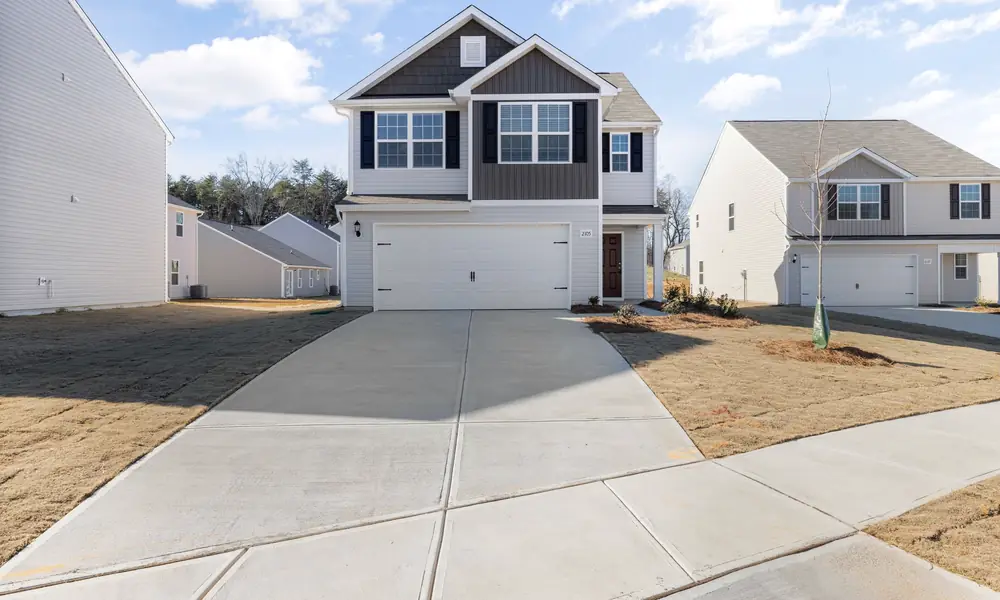 Driveways
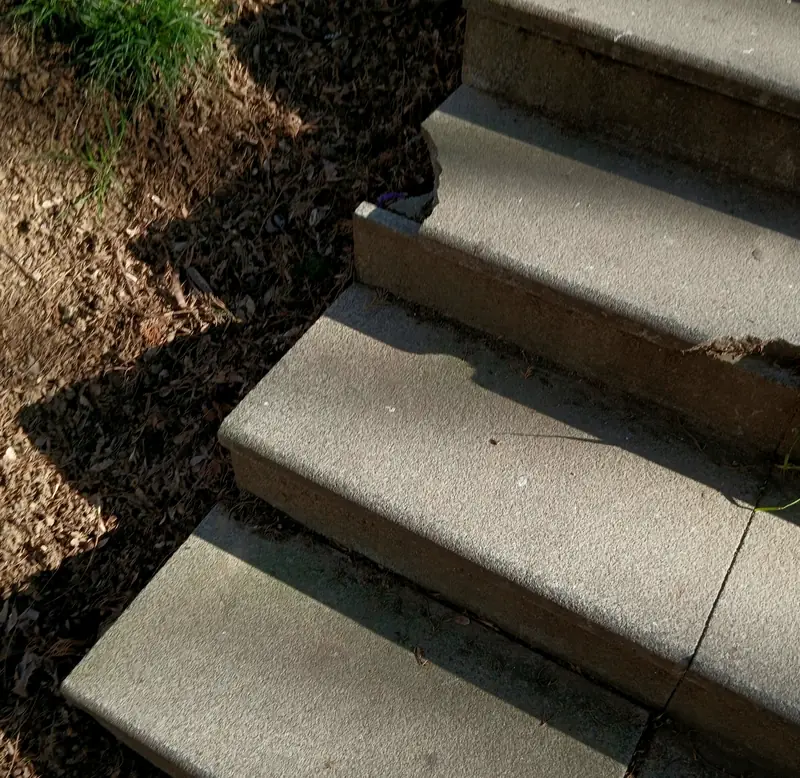 Sidewalks and steps
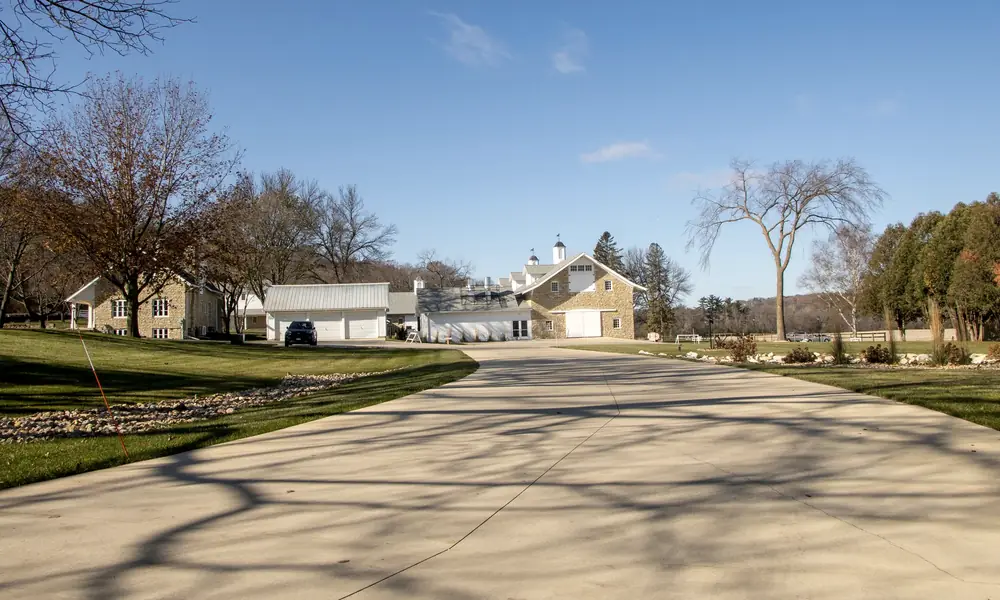 Garage, shop and barn slabs